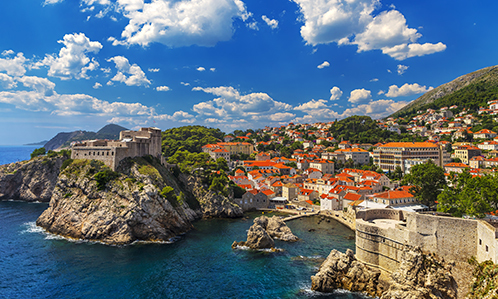
A troubled past as a country coveted by the Ottoman Empire, Venice, and Yugoslavia has left Croatia with a rich cultural heritage whose influence can be seen in the country’s architecture and cuisine.
In the cities of Zagreb and Dubrovnik you’ll be entranced by museums and the lively atmosphere at the always‑busy cafés, while on islands in the Adriatic Sea you’ll find delightful gastronomy in restaurants whose terraces overlook beaches with turquoise waters.

Much more than a seaside resort, Croatia is a fascinating mix of architecture, culture, and natural parks. With the help of your Travel Professional, prepare yourself for an unforgettable trip.
Zagreb is often snubbed by tourists, but it will unveil surprising secrets to those who take the time to visit. Wander around historical neighborhoods and visit quirky museums before taking a break in one of the city’s many cafés. Plenty of green spaces plus a mix of grandiose architecture and socialist aesthetics make the Croatian capital a unique place.
The official language of Croatia is Croatian, sometimes erroneously called Serbo‑Croatian. Italian and German are also frequently spoken in certain regions. Don’t worry, English is widespread in the tourist sector, and you’ll have no problems communicating in it.
In July and August, the Adriatic Sea reaches almost 26°C and the beach resorts are busy. The best time to visit Croatia is in May, June, or September, when there are fewer tourists and the sea is warm enough for a swim.
Croatia has two very different climates. Inland, winters are cold and temperatures regularly drop below 0°C. Summers are dry with occasional evening thunderstorms. The coast, on the other hand, has a Mediterranean climate: mild winters and dry summers where temperatures can climb to 30°C.
Although Croatia is a member of the European Union, it uses its own currency: the kuna, which is divided into 100 lipa. Credit cards are accepted in most hotels and restaurants, but there’s usually a 5% fee for using them. Shops, small restaurants, and bed and breakfasts often accept only cash. To make your life simpler, reserve and plan your trip ahead of time with the help of a travel agent.
Electric current in Croatia runs at 230 volts and plugs have two round pins. Don’t forget to pack an adaptor in your suitcase!
You can call all over the world from Croatia. Internet and Wi-Fi are widespread and often free in hotels, restaurants, and some public areas.
To call Croatia directly from Canada, you must dial:
Many flights leave from Canada to Zagreb, an excellent starting point for exploring Croatia.